
Most guitar players are solving the wrong problem.
If your tone feels close but still does not translate, the answer may not be more gear.
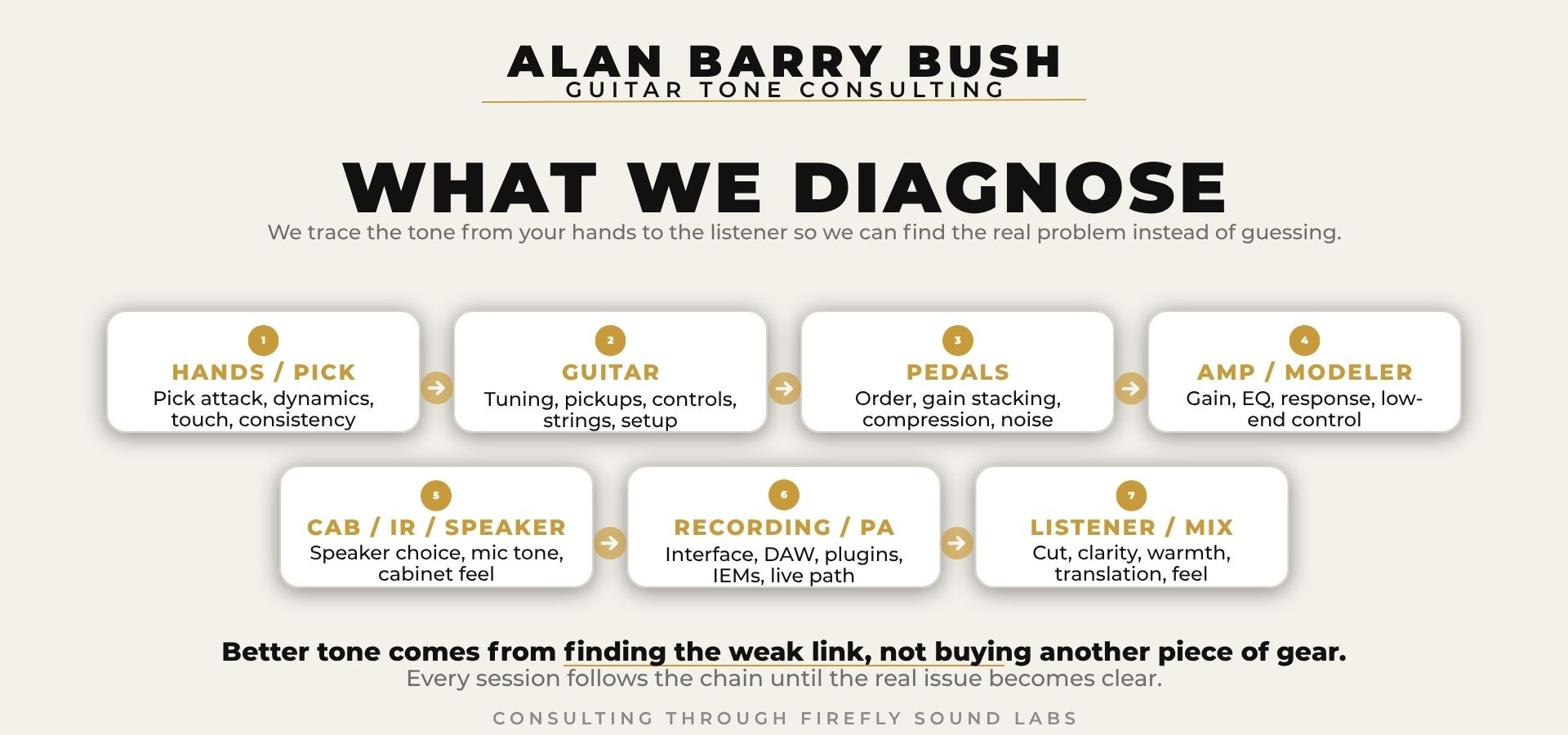
The issue might be gain staging. It might be EQ. It might be pickup height, pedal order, amp settings, recording level, monitoring, mic placement, or how the guitar sits in a mix.
The problem is that most players judge tone in isolation, then wonder why it falls apart live, in headphones, in a recording, or in a full band mix.
Great tone is not just what comes out of the amp. Great tone is what survives the chain.
Tone does not stop at the amp. The sound people hear is shaped by the full chain.
This is for players who are tired of guessing.
This is a good fit if you:
Keep buying gear but still feel stuck
Like your tone alone but lose it in a mix
Struggle with harshness, mud, fizz, thinness, or getting buried
Cannot get your recorded tone to match what you hear in your head
Need your guitar to work better live, in church, online, or in a band
Want a clear plan instead of random tone tips
The goal is not to make you dependent on me.
The goal is to help you understand your rig well enough to make better decisions.
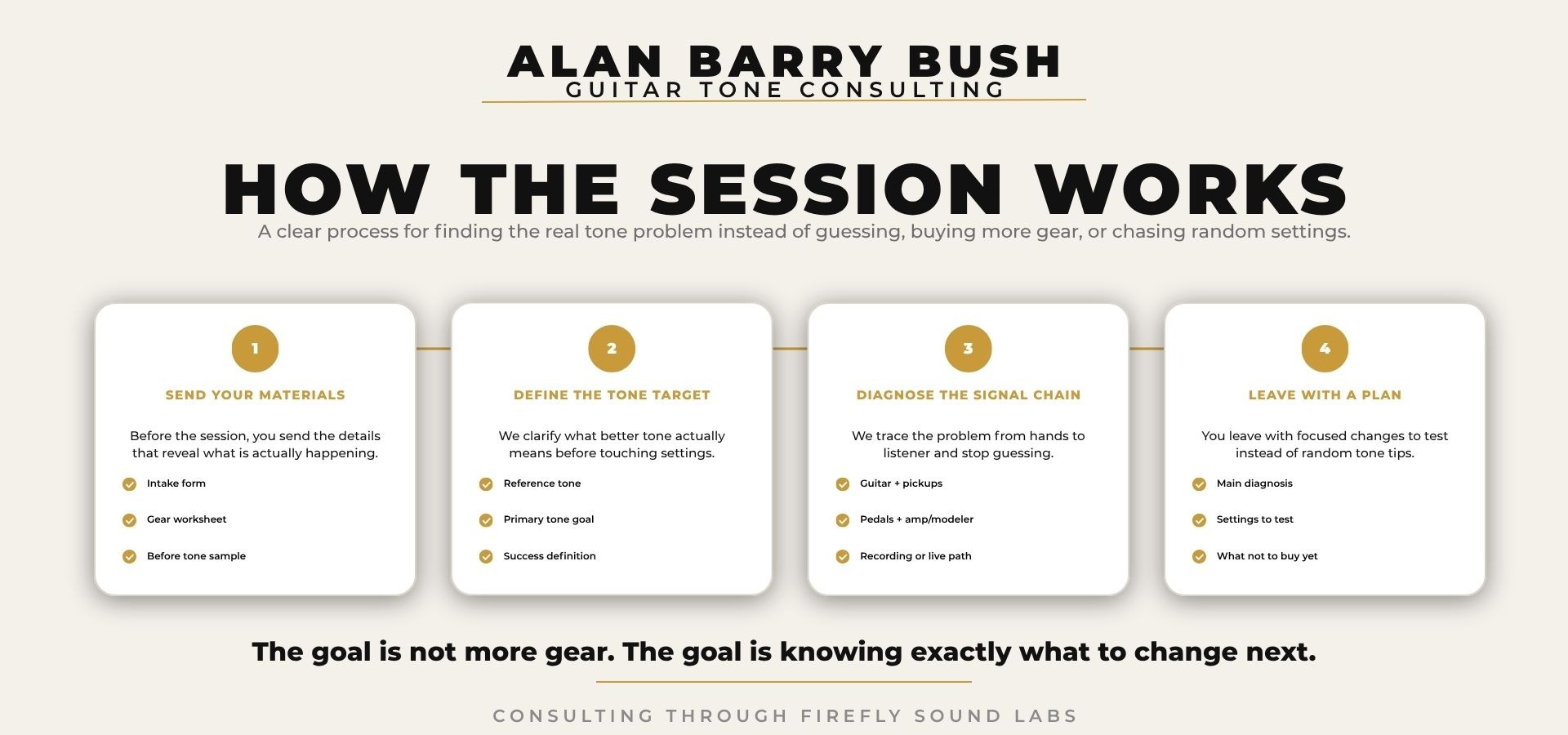
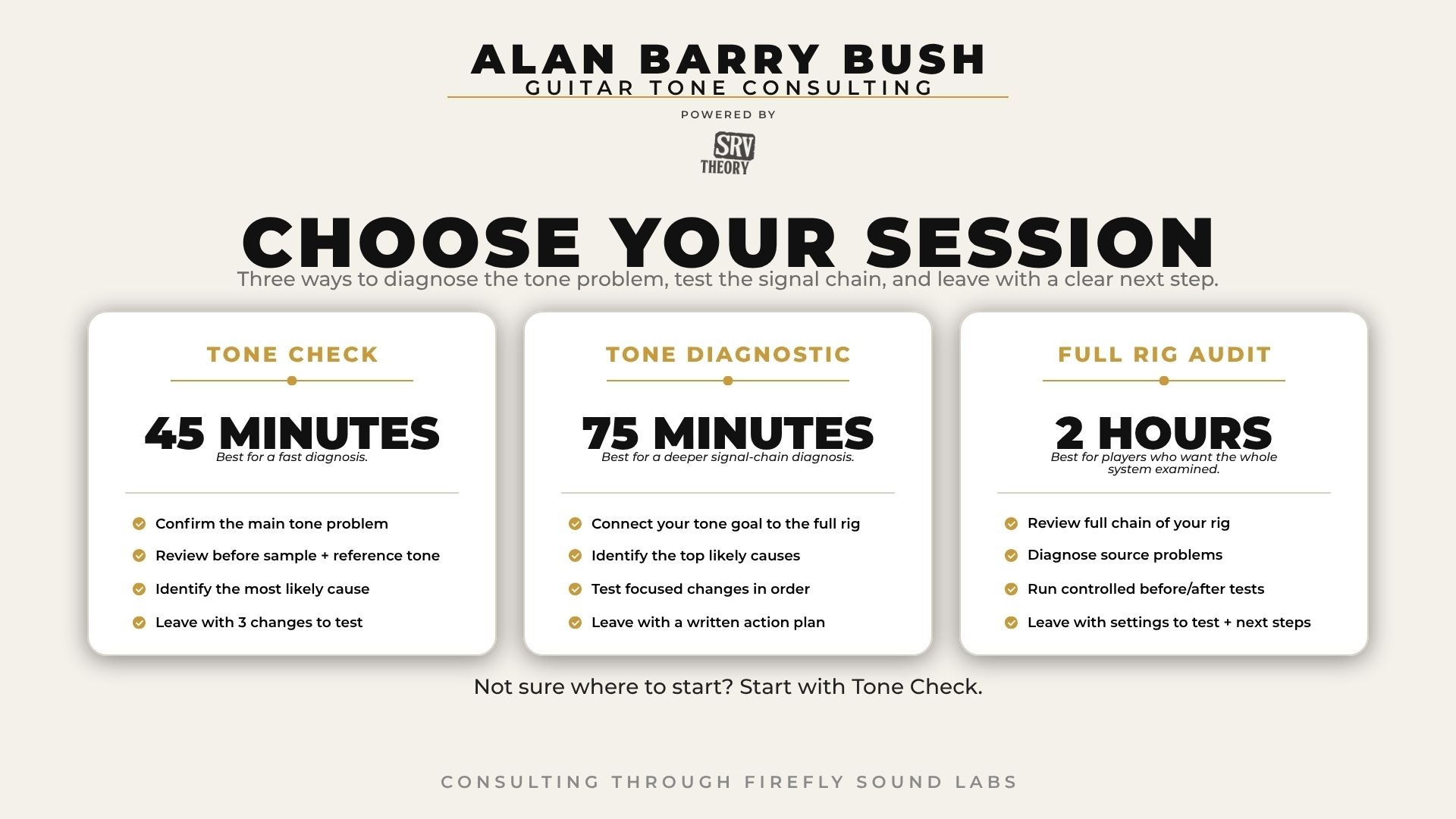
Come prepared. Leave with clarity.
The better the preparation, the better the diagnosis. Before the consultation, you may be asked to provide:
A short recording of your current tone
Reference tracks or tone examples
Photos or screenshots of your pedalboard, amp, modeler, plugins, or recording chain
A list of your current gear
The main tone problem you want solved
The session starts with diagnosis, not setup. That is how we protect your time and get to the real issue faster
The goal is not more gear. The goal is better decisions.
After the consultation, you should have a clearer understanding of:
Why your tone is not translating
Which part of the chain needs attention first
Which settings or habits are helping
Which settings or habits are hurting
What to test before spending money
How to compare tone changes honestly
Do not buy your way out of a problem you have not diagnosed yet.
Frequently Asked Questions
Do I need expensive gear for this to work?
No. The goal is to get better results from the gear you already own. If something truly needs to be replaced, that recommendation should come after diagnosis, not before.
Can this help with recorded tone?
Yes. Recorded tone is one of the main reasons this service exists. We can review interface level, plugins, mic or IR choices, monitoring, reference tracks, and mix translation.
Can this help with live or church tone?
Yes. If your tone works at home but falls apart live, we can look at gain structure, EQ, monitoring, PA/IEM translation, and how your guitar supports the full mix.
Is this only for SRV-style tone?
No. SRV Theory informs the diagnostic approach, especially the idea that tone continues after the amp, but the consultation is built around your tone goal, your gear, and your context.
What if I do not know how to describe what is wrong?
That is normal. Part of the process is helping you put language to the problem: harsh, muddy, thin, buried, fizzy, compressed, stiff, disconnected, or not translating.
Will you tell me what gear to buy?
Only if the diagnosis proves that gear is the actual limitation. The first priority is to make better decisions with what you already have.
Can we do this over Zoom?
Yes. Virtual sessions work well when you provide recordings, reference tracks, and clear photos or screenshots of your rig before the call.
Ready to stop guessing?
If your tone is close but still not translating, let’s diagnose the chain and build a practical plan.
Stop chasing gear.
Start dialing in tone.
After you submit the form:
1. I’ll review your tone goal.
2. I’ll recommend the best session type.
3. We’ll schedule the call.
4. You’ll receive prep instructions before the session.
Copyright Alan Barry Bush 2026 | Privacy Policy | Terms of Service